


SOLD! Coin Op Chester Pollard Polo Game
- Jun 2, 2025
- 3 min read
Unearthing a Unicorn: The Ultra-Rare Chester-Pollard Coin-Op Mechanical Polo Game

Every so often, an object emerges from decades of obscurity that completely resets what we know about vintage coin-operated history. For decades, collectors have marveled at the legendary 1920s and 30s mechanical sports games crafted by the Chester-Pollard Amusement Co. Their iconic twin-player Football (Soccer), Golf, and Baseball arcade games are celebrated as mechanical masterpieces.
But hiding in a Chicago basement for over half a century was a phantom variant that many enthusiasts didn't even know existed: The Chester-Pollard Mechanical Polo Game.
This isn't just a rare arcade piece; it is an absolute artifact of coin-op history that recently sent shockwaves through the collecting community.
The Mystery of the Polo Machine
While Chester-Pollard's football and golf games used intricate mechanical levers to manipulate miniature athletes on a felted field, the Polo game took that exact engineering principle and adapted it to the sport of kings.
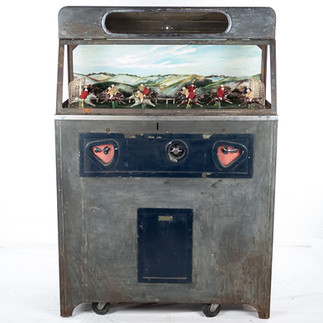
Before it surfaced, finding another documented version of this specific polo variant was a near-impossible task. Housed in a commanding steel cabinet featuring glass sides and a distinctively stylized Art Deco pressed steel top, the machine was designed to stand tall on the mid-century midway or a bustling arcade floor.
The visual appeal is pure vintage theatricality: a chrome-trimmed sign cutout tops the hood, while a hand-painted backdrop brings the stadium atmosphere to life inside the cabinet.
Breathtaking Mechanical Ingenuity
What makes this machine an engineering marvel is the sheer complexity of its multi-player setup. Unlike simpler games of the era, the Chester-Pollard Polo game features two full teams of eight horse-mounted players—a total of 16 independently moving miniature figures on the field.
When a player presses down the front levers, the mounted figures swing their tiny polo mallets freely to strike the original wooden polo ball across the field. The brilliant attention to detail is evident in the players' uniforms: each miniature figure is outfitted in a custom, hand-knit jersey, cleverly designed to conceal the complex underlying arm and mallet mechanics from the user.
From a Chicago Basement to a $10,000 Triumph
The journey of this specific machine reads like a classic treasure hunt. It came out of a Chicago basement completely in pieces. A previous owner had recognized its historical value and started a meticulous restoration process, but sadly passed away before the project could be finished.
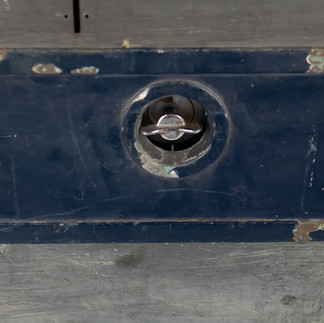
When it arrived at the auction house, it was a massive, brilliant puzzle. After careful reassembly, the team was thrilled to find that despite being stripped of paint and missing its exterior cabinet glass, the incredibly complex internal mechanism was entirely complete. The horsemen and mallets swung freely, the ball-lifter functioned perfectly, and the original coin mechanism and cash box remained fully intact along with the original front control panel locks and keys.
Because of its undeniable status as a "unicorn" of the coin-op world, it represents the ultimate blank canvas for a world-class restoration project. Collectors instantly recognized the magnitude of the discovery. Carrying an initial estimate of $2,000 – $3,000, fierce bidding drove the final price to a staggering $10,000 hammer price, cementing its status as one of the most exciting coin-op finds of the decade.
Machine at a Glance:
Manufacturer: Chester-Pollard Amusement Co. (Attributed)
Game Type: Rare Coin-Operated Mechanical Polo
Provenance: Discovered in pieces in a Chicago basement
Dimensions: 62″ High x 43″ Wide x 19″ Deep
Features: 16 horse-mounted players with hand-knit jerseys, original wood ball, hand-painted backdrop, Art Deco pressed steel top, and original coin mech/cash box
The survival of this Chester-Pollard Polo game proves that incredible pieces of American coin-op history are still out there waiting to be found. It stands as a monument to early 20th-century mechanical entertainment—an era when complex sports could be perfectly simulated with nothing more than clockwork gears, levers, and a little bit of magic.













Comments